
ekirana.nl The ninth and final form of Maa Durga, Maa Siddhidatri, represents spiritual fulfilment, divine wisdom and the attainment of siddhis — extraordinary spiritual accomplishments described in Hindu traditions. Worshipped on the ninth day of Navratri, she symbolises the culmination of the spiritual journey: the moment when devotion, discipline, courage and inner transformation come together as wisdom. In our Navratri series exploring the relationship between the nine forms of Maa Durga and the numbers 1 to 9, Maa Siddhidatri finds a meaningful symbolic connection with Number 9 — the number of completion, compassion, courage and higher purpose. This is a spiritual interpretation created for the series, rather than a universally established correspondence in traditional numerology. 1. Maa Siddhidatri and the Energy of Number 9 In numerology, the number 9 represents the completion of a cycle. It carries the symbolic wisdom of experience — the understanding that every beginning eventually leads to a lesson, and every lesson offers an opportunity for growth. Maa Siddhidatri embodies a similar spiritual ideal. She represents the grace that arises when the seeker moves beyond the desire for achievement and begins to understand the deeper purpose behind knowledge, power and success. Completion and fulfilment Number 9 symbolises the end of a cycle and the wisdom gained along the way. Maa Siddhidatri reminds us that fulfilment is not simply about reaching a destination; it is about becoming wiser through the journey. Wisdom beyond knowledge The spiritual symbolism of Maa Siddhidatri encourages us to use what we know with humility, compassion and awareness. Compassion and service Number 9 is often associated with humanitarian values and concern for the greater good. Maa Siddhidatri inspires us to look beyond personal gains and ask how our abilities can benefit others. 2. The Numerology of 9: The Energy of Mars In the Chaldean numerology tradition, Number 9 is associated with Mars, the planet symbolically connected with courage, determination, vitality and action. Mars is often understood as the force that gives us the strength to confront obstacles. But courage becomes truly meaningful when it is guided by wisdom. The connection with Maa Siddhidatri invites us to reflect on three questions: The higher expression of Number 9 is not simply the power to fight. It is the wisdom to recognise which battles are worth fighting — and when peace is the greater victory. Note: Planetary associations differ across numerological systems. The Mars connection is specific to the Chaldean framework. 3. What Maa Siddhidatri Teaches Us About Spiritual Attainment nepaljyotish.org The word “Siddhidatri” can be understood as “the giver of Siddhis” or spiritual attainments. In Hindu traditions, she is associated with the bestowal of spiritual accomplishments and divine grace. Yet there is a deeper lesson here: attainment without humility can become another form of attachment. We may acquire knowledge, professional success, influence or even spiritual recognition, but these achievements do not automatically make us wise. Maa Siddhidatri’s symbolism invites us to move from having power to using power responsibly. For those who resonate with Number 9, this can mean learning to: The true measure of spiritual growth is not how extraordinary we appear, but how much greater our understanding, kindness and inner freedom become. 4. The Shadow Side of Number 9 Every number in numerology has its constructive qualities and its potential challenges. Symbolically, the intense energy of Number 9 may express itself as impatience, emotional excess or a tendency to carry other people’s burdens. Challenge Spiritual lesson Wanting to rescue everyone Compassion needs healthy boundaries. Anger at injustice Channel courage into constructive action. Difficulty letting go Honour the lesson without remaining attached to the pain. Expecting others to understand your sacrifices Give consciously, not at the cost of your own well-being. Feeling responsible for every outcome Recognise the difference between service and control. Maa Siddhidatri’s message is one of balance: serve without self-erasure, act without unnecessary aggression, and release what has fulfilled its purpose. 5. Maa Siddhidatri, Karma and the Completion of a Cycle Number 9 offers a beautiful metaphor for karmic reflection. It asks us to consider what our experiences have taught us and how we can respond differently in the future. Instead of viewing karma only as reward or punishment, we can use this day to reflect on our actions, intentions and responsibilities. Ask yourself: These are reflective spiritual questions, not a method for predicting karmic outcomes. Their value lies in the awareness and positive action they may inspire. 6. Mantra and Affirmation for Maa Siddhidatri Mantra Om Devi Siddhidatryai Namah. Meaning: Salutations to Goddess Siddhidatri, the bestower of spiritual attainments. You may chant this mantra with devotion and a quiet mind, according to your personal practice or tradition. Affirmation for the Ninth Day of Navratri “I honour every lesson my journey has taught me. I release what no longer serves my growth and welcome the wisdom that comes with experience. I use my strength with compassion, my knowledge with humility and my abilities in the service of a greater good. I trust the completion of old cycles and welcome new beginnings with faith, courage and an open heart.” 7. The Complete Journey of Navadurga Through Numbers 1–9 The nine forms of Maa Durga can be viewed, symbolically, as a journey of inner development through the numbers 1 to 9. Maa Shailaputri Foundation, beginnings and determination Maa Brahmacharini Discipline, devotion and patience Maa Chandraghanta Courage, expression and purposeful action Maa Kushmanda Creation, structure and constructive energy Maa Skandamata Nurturing, adaptability and growth Maa Katyayani Love, responsibility and righteous action Maa Kalaratri Facing fear and inner transformation Maa Mahagauri Purification, forgiveness and renewal Maa Siddhidatri Wisdom, fulfilment and spiritual completion This sequence is a contemporary symbolic interpretation for the series, not a canonical numerological mapping prescribed by Hindu scripture. The Final Message: From Beginnings to Wisdom The journey from Number 1 to Number 9 is a reminder that growth is not merely about becoming more successful, powerful or knowledgeable. It is about becoming more conscious of how we live, treat others, and
Maa Mahagauri and Numerology: The Purifying Power of Number 8
If Maa Shailaputri teaches us to begin, Maa Brahmacharini to persevere, Maa Chandraghanta to act with courage, Maa Kushmanda to create, Maa Skandamata to nurture, Maa Katyayani to stand for what is right, and Maa Kalaratri to face our fears, then Maa Mahagauri invites us to move towards purity, peace, forgiveness, and spiritual renewal. Worshipped on the eighth day of Navratri, Maa Mahagauri is a serene and compassionate manifestation of the Divine Mother. Her name means the supremely radiant or exceptionally fair one. Her traditional imagery, characterised by white garments and a luminous appearance, symbolises purity, tranquillity and the removal of suffering. Through the symbolic lens of numerology, her qualities can be explored alongside Number 8 — karma, responsibility, resilience, justice and transformation through experience. The connection between Maa Mahagauri and Number 8 is an interpretive spiritual association inspired by the eighth day of Navratri. 1. Why connect Maa Mahagauri with Number 8? Purification after life’s challenges Number 8 is often interpreted through the themes of responsibility, consequences and lessons learned through experience. Maa Mahagauri’s symbolism invites us to reflect on how difficult experiences can lead to greater awareness, humility and inner clarity. Strength softened by serenity Number 8 is frequently associated with endurance, authority and material responsibility. Maa Mahagauri reminds us that true strength need not be harsh; it can be expressed through calmness, fairness and self-mastery. The opportunity to begin again Her luminous form symbolises purity and renewal. In a numerological reflection, this suggests that past mistakes need not define our future when we accept responsibility and choose a wiser path. 2. Maa Mahagauri and the deeper psychology of Number 8 In Chaldean numerology, Number 8 is traditionally associated with Saturn, known in Indian astrology as Shani. Saturn symbolises discipline, accountability, patience, justice and the consequences of our actions. Number 8 is often portrayed as a number of significant life lessons. Its journey may involve learning to use power responsibly, balancing material ambition with inner values, and developing strength without becoming hardened by experience. Maa Mahagauri’s symbolism offers a beautiful spiritual counterbalance: the ability to remain pure in intention even while navigating life’s difficult lessons. Number 8 — The Achiever Karma • Discipline • Justice • Resilience Number 8 represents the challenge of balancing worldly responsibility with personal integrity and inner development. Lessons we can draw from Maa Mahagauri 3. The deeper symbolism of Maa Mahagauri Her white garments — purity and clarity White is a central feature of Maa Mahagauri’s traditional iconography. It symbolises purity, serenity and spiritual clarity. For Number 8, this imagery invites us to pursue achievement without compromising our values. The white bull — strength with steadiness Her traditional mount represents strength and stability. It reminds us that real resilience is not merely the ability to endure hardship but the ability to move through it without losing our sense of direction. The trident — discernment and the overcoming of obstacles The trident is a symbol of divine power. As a reflective metaphor, it invites us to examine the patterns that keep us stuck and make choices that support a more conscious life. Her serene expression — peace after struggle Maa Mahagauri’s calm appearance offers a powerful contrast to the fierce form of Maa Kalaratri, worshipped on the preceding day. Symbolically, the movement from the seventh day to the eighth can represent the journey from confronting darkness to finding clarity and peace. 4. Maa Mahagauri and the shadow side of Number 8 In numerological interpretation, Number 8 can be associated with excessive control, overwork, fear of failure or becoming overly identified with material success. Maa Mahagauri’s symbolism encourages a gentler relationship with responsibility, achievement and the past. Potential challenge Spiritual lesson Carrying old guilt Accept the lesson and choose a better path Becoming too controlling Practise trust alongside responsibility Measuring worth through success Recognise your value beyond achievements Holding on to resentment Work towards forgiveness without abandoning boundaries Feeling hardened by hardship Preserve compassion while remaining strong These are reflection prompts, not inevitable characteristics of everyone associated with Number 8. 5. The karmic significance: Can we begin again? One of the most meaningful connections between Maa Mahagauri and Number 8 involves the idea of accountability without permanent self-condemnation. In spiritual traditions, karma concerns actions and their consequences. Numerology sometimes uses the language of karmic lessons to explore responsibility and personal development, although numerology is not a scientifically established way to determine someone’s karmic destiny. Maa Mahagauri’s symbolism invites us to reflect on three important principles: This is particularly relevant to the symbolic journey of Number 8, where responsibility can be understood not as punishment, but as an opportunity to develop maturity and integrity. 6. A spiritual practice inspired by Maa Mahagauri Begin with prayer Offer your prayers to Maa Mahagauri. You may chant Om Devi Mahagauryai Namah with devotion and a calm mind. Reflect honestly. Ask yourself: What am I carrying that I could begin to release — guilt, resentment, an outdated belief or an unrealistic expectation? Choose renewal. Identify one action that will bring greater clarity into your life. It may be making amends, simplifying a commitment, forgiving yourself or establishing a healthier boundary. 7. An affirmation inspired by Maa Mahagauri in.pinterest.com My affirmation “With the blessings of Maa Mahagauri, I release what no longer serves my growth. I accept my responsibilities with courage, learn from my experiences and choose integrity in my actions. I welcome clarity, practise forgiveness and allow peace to grow within me. My strength is grounded in wisdom, and my success is guided by compassion.” The deeper message: From karmic lessons to inner peace The first eight days of Navratri can be explored as a symbolic journey of personal evolution: Through this interpretive numerological journey, Number 8 brings us to a profound question: after everything life has taught us, what kind of person are we choosing to become? Maa Mahagauri reminds us that the purpose of life’s lessons is not to leave us burdened forever. We can learn, take
Maa Kalaratri and Numerology: The Transformative Power of Number 7
If Maa Shailaputri teaches us to begin, Maa Brahmacharini to persevere, Maa Chandraghanta to act with courage, Maa Kushmanda to create, Maa Skandamata to nurture, and Maa Katyayani to stand up for what is right, Maa Kalaratri teaches us to face the darkness we fear and emerge transformed. Worshipped on the seventh day of Navratri, Maa Kalaratri is one of the most formidable manifestations of Maa Durga. Although her appearance is fierce, she is revered as a compassionate protector who destroys evil, removes obstacles and dispels fear. Her name combines kala, associated with time and darkness, and ratri, meaning night. Her symbolism invites us to look beyond appearances and recognise the protective power concealed within the fierce. Through the symbolic lens of numerology, her qualities offer a compelling connection with Number 7 — introspection, spiritual inquiry, inner wisdom and the search for truth. This is a spiritual interpretation inspired by the seventh day of Navratri and the symbolism of Number 7, rather than a universally established correspondence between Maa Kalaratri and a numerological number. 1. Why connect Maa Kalaratri with Number 7? The courage to face the unknown Number 7 is often linked to introspection and the search for more profound understanding. Maa Kalaratri’s fierce form reminds us not to turn away from difficult truths simply because they make us uncomfortable. Wisdom born in darkness Darkness is not always an enemy; sometimes it represents the unknown, a period of uncertainty or a phase of profound change. Number 7’s contemplative symbolism invites us to pause, reflect and seek understanding before moving forward. The light of inner awareness Maa Kalaratri symbolises protection from destructive forces. As a metaphor for personal growth, she encourages us to recognise fear, question limiting beliefs and develop the clarity to choose a wiser response. 2. Maa Kalaratri and the deeper psychology of Number 7 In many Indian numerological traditions, Number 7 is associated with Ketu, symbolically linked with detachment, spiritual inquiry, introspection and the search for liberation. Other numerological systems use different planetary associations. Maa Kalaratri’s symbolism offers a meaningful way to explore the deeper side of Number 7: the willingness to question appearances, confront uncomfortable truths and discover strength through inner transformation. Number 7 — The Seeker Introspection • Truth • Detachment • Spiritual wisdom Number 7 symbolises the search for meaning beyond superficial appearances. Lessons we can draw from Maa Kalaratri 3. The deeper symbolism of Maa Kalaratri 7 Her dark complexion — the mystery of the unknown Maa Kalaratri’s dark appearance is a defining feature of her traditional iconography. Symbolically, it can invite us to confront the parts of life we do not yet understand. Not everything unfamiliar is harmful, and not every difficult period is without meaning. Her dishevelled hair and fierce expression — freedom from conventional appearances Her appearance challenges the idea that the divine must always look gentle or beautiful according to worldly expectations. Her fierce form reminds us that protective power can appear in unexpected ways. Her weapons — the destruction of harmful forces Her weapons represent divine protection against evil. In personal reflection, they can symbolise the courage to confront destructive patterns, establish boundaries and act decisively when necessary. Her protective gesture — fearlessness Despite her fearsome appearance, Maa Kalaratri is also a giver of fearlessness and blessings. This is central to her symbolism: the force that appears terrifying to negativity can be a source of reassurance to those seeking protection. 4. Maa Kalaratri and the shadow side of Number 7 Number 7 is often associated with a thoughtful, inward-looking nature. When reflection becomes excessive, however, it can turn into isolation, suspicion or endless analysis. Maa Kalaratri’s symbolism invites us to move through darkness rather than become trapped within it. Potential Challenge and Spiritual Lessons Fear of the unknown Meet uncertainty with awareness. Overthinking Balance reflection with action. Emotional withdrawal Protect your peace while still allowing connection. Distrust of others Use discernment without assuming the worst. Attachment to old identities Allow yourself to change and grow. These are reflective themes, not inevitable characteristics of everyone associated with Number 7. 5. Maa Kalaratri and the spiritual meaning of transformation One of the most powerful lessons of Maa Kalaratri is that transformation may require us to confront what we have avoided. Occasionally the darkness we fear is not an external force. It may be a limiting belief, an unhealthy pattern, a painful memory or the realisation that something in our lives must change. A reflective practice inspired by her symbolism can involve three steps: Step 1: Acknowledge Name one fear or recurring pattern you are ready to understand. You do not need to judge yourself for having it. Step 2: Understand Ask what this fear may be teaching you. Distinguish between a genuine risk that requires action and an imagined outcome that is keeping you stuck. Step 3: Transform Choose one constructive action that reflects greater awareness. It could mean setting a boundary, seeking support, changing a habit or accepting that you cannot control everything. 6. A spiritual practice inspired by Maa Kalaratri On the seventh day of Navratri, devotees may pray to Maa Kalaratri for courage, protection and freedom from fear. A devotional mantra is: Maa Kalaratri Mantra ॐ देवी कालरात्र्यै नमः॥ Om Devi Kalaratryai Namah A salutation to Goddess Kalaratri. After prayer, sit quietly for a few minutes and reflect on this question: What am I ready to face so that I can move forward with greater freedom? The purpose is not to force yourself to confront everything at once, but to approach life with honesty, courage and compassion. 7. An affirmation inspired by Maa Kalaratri My affirmation “With the blessings of Maa Kalaratri, I face the unknown with courage and clarity. I release the fears that limit me, recognise the truth beneath appearances and trust my ability to move through difficult transitions. I welcome transformation with faith and emerge wiser, stronger and more conscious.” The deeper message: Darkness can become a doorway to wisdom. The first seven
Numerology and Maa Katyayani: The Courage of Number 6
If Maa Shailaputri teaches us to begin, Maa Brahmacharini to persevere, Maa Chandraghanta to act with courage, Maa Kushmanda to create, and Maa Skandamata to nurture, Maa Katyayani teaches us to stand firmly for what is right. Worshipped on the sixth day of Navratri, Maa Katyayani is a powerful warrior manifestation of the Divine Mother. She symbolises courage, righteous action, protection, determination and the destruction of forces that threaten harmony. Through the symbolic lens of numerology, her qualities offer an intriguing connection with Number 6 — love, responsibility, harmony, justice and the protection of those we care about. This is a spiritual interpretation inspired by the sixth day of Navratri and the symbolism of Number 6, rather than a universally established correspondence between Maa Katyayani and a numerological number. 1. Why connect Maa Katyayani with Number 6? The courage to protect Number 6 is commonly associated with care, responsibility and a desire to protect loved ones. Maa Katyayani reminds us that genuine care sometimes requires courage, firm decisions and the willingness to confront injustice. Love with strength The nurturing side of Number 6 is not merely about keeping everyone happy. Maa Katyayani’s warrior form reminds us that love can be fierce when it protects dignity, truth and the well-being of others. Harmony through right action Harmony is not always achieved by avoiding disagreement. Sometimes, it requires addressing what is wrong. Maa Katyayani symbolises the strength to restore balance through decisive and principled action. 2. Maa Katyayani and the deeper psychology of Number 6 In Chaldean numerology, Number 6 is associated with Venus, the planet symbolically connected with love, beauty, relationships, attraction and harmony. At first glance, Venus may seem an unusual match for a fierce warrior goddess. But this contrast reveals a beautiful insight: love is not always gentle, and harmony is not always passive. Sometimes, the deepest expression of love is the courage to protect, the wisdom to set boundaries and the determination to stand up for what is right. Number 6 — The Nurturer Love • Responsibility • Justice • Harmony Number 6 represents the desire to create harmony, care for others and take responsibility for relationships and community. Lessons we can draw from Maa Katyayani 3. The symbolism of Maa Katyayani The sword — the power of discernment The sword represents the ability to confront and overcome negative forces. As a metaphor for inner growth, it reminds us to distinguish between what deserves our energy and what we must release. The lion — fearless action The lion symbolises strength and courage. Maa Katyayani’s association with the lion reminds us that we can face difficult situations without surrendering our values. Her warrior form — love in action Her divine power represents protection and the restoration of righteousness. Symbolically, she teaches us that care becomes meaningful when it translates into action. 4. The shadow side of Number 6 In numerological interpretation, Number 6’s desire to care for others can sometimes become over-responsibility, perfectionism or a tendency to control situations in the name of love. Maa Katyayani’s symbolism offers a reminder to combine compassion with courage and responsibility with discernment. Potential challenge Spiritual lesson Pleasing everyone Honour your values Taking responsibility for everyone Recognise what is yours to carry. Staying in unhealthy situations to preserve peace Understand the importance of boundaries. Becoming controlling out of concern Allow others to make their own choices. Avoiding difficult conversations Speak with courage and respect. These are reflection prompts, not fixed characteristics of every Number 6 person. 5. A spiritual practice inspired by Maa Katyayani Begin with prayer Offer your prayers to Maa Katyayani. You may chant Om Devi Katyayanyai Namah with devotion and a focused mind. Identify where courage is needed Ask yourself: Where am I sacrificing my peace or values to avoid an uncomfortable conversation or decision? Take one principled action Choose a constructive step: establish a boundary, speak honestly, correct an injustice or make a decision you have been postponing. 6. An affirmation inspired by Maa Katyayani My affirmation “With the blessings of Maa Katyayani, I stand in my truth with courage and dignity. I protect what is precious without fear, love without losing myself, and act with wisdom when life demands strength. May my actions restore balance, uphold justice and reflect the highest expression of love.” The deeper message: Love must sometimes be courageous The first six days of Navratri can be explored as a symbolic journey of personal evolution: Through this interpretive numerological journey, Number 6 introduces a powerful lesson about the relationship between love and strength. Maa Katyayani reminds us that preserving harmony does not mean tolerating everything. Sometimes, the most loving thing we can do is to stand firmly for truth, protect our dignity and have the courage to make a difficult choice.
Maa Skandamata and Numerology: The Nurturing Wisdom of Number 5
If Maa Shailaputri teaches us to begin, Maa Brahmacharini to persevere, Maa Chandraghanta to act with courage, and Maa Kushmanda to create, Maa Skandamata teaches us to nurture what we have created with love, wisdom and responsibility. Worshipped on the fifth day of Navratri, Maa Skandamata is the mother of Lord Skanda, also known as Kartikeya, the divine commander of the celestial army. She represents maternal love, protection, compassion and the wisdom to guide another towards their potential. Through the symbolic lens of numerology, her qualities offer a beautiful connection with Number 5 — adaptability, communication, freedom, curiosity and the experience of life through change. This is a spiritual interpretation inspired by the fifth day of Navratri and the symbolism of the number 5, 1. Why connect Maa Skandamata with Number 5? The wisdom of nurturing Number 5 is often associated with curiosity, learning and adaptability. Maa Skandamata reminds us that growth is not only about personal achievement; it is also about helping others develop their abilities while allowing them room to become themselves. Freedom with protection Maa Skandamata’s traditional imagery combines maternal tenderness with the strength of a lion. Symbolically, this reflects the balance between giving someone freedom to explore and providing the security they need to grow. Growth through change Number 5 represents movement, exploration and new experiences in many numerological interpretations. Maa Skandamata’s symbolism invites us to meet change with compassion, flexibility and a willingness to learn. 2. Maa Skandamata and the psychology of Number 5 In Chaldean numerology, Number 5 is associated with Mercury, symbolising communication, intelligence, curiosity, versatility and the ability to adapt. Maa Skandamata’s maternal symbolism offers an interesting way to reflect on how these qualities can be used constructively. Intelligence becomes wisdom when it is guided by compassion, and freedom becomes meaningful when accompanied by responsibility. Number 5 — The Communicator Intelligence • Freedom • Adaptability • Expression Number 5 symbolises a curious mind that learns through experience and thrives on movement, discovery and communication. Lessons we can draw from Maa Skandamata 3. The deeper symbolism of Maa Skandamata The Divine Mother holding Skanda — nurturing potential Maa Skandamata carries her son Kartikeya, symbolising the intimate connection between motherhood, protection and the development of divine potential. As a metaphor for personal growth, this image teaches us to nurture the gifts within ourselves and others. Potential flourishes when it receives encouragement, patience and appropriate guidance. The lotus — growth beyond circumstances The lotus is associated with purity and spiritual unfolding. It grows in muddy water yet rises toward the light. This story reminds us that our circumstances need not determine the limits of our growth. The lion — strength guided by love The lion represents courage and power in her traditional imagery. Alongside the tender image of a mother and child, the lion offers a beautiful lesson: strength need not be harsh, and gentleness need not be powerless. 4. Maa Skandamata and the shadow side of Number 5 Number 5 is often associated with curiosity and freedom, but an excessive need for stimulation or constant change may make consistency difficult. Maa Skandamata’s symbolism offers a reminder to balance freedom with care and flexibility with commitment. Potential challenge Spiritual lesson Restlessness Learn to remain present. Impulsive decisions Pause and consider the consequences. Difficulty with commitment Honour the promises that matter Fear of restrictions Distinguish healthy boundaries from unnecessary limitations. These are reflective themes rather than fixed characteristics of every Number 5 person. 5. Maa Skandamata: The numerology of motherhood and relationships One of the most beautiful ways to explore Maa Skandamata is through the idea that love means nurturing without possessing. This message is relevant not only to parents but also to partners, teachers, mentors, healers and anyone who supports another person’s growth. For those who resonate with Number 5, this reflection is particularly useful: freedom and connection need not compete. Healthy relationships make room for both. 6. A spiritual practice inspired by Maa Skandamata Begin with devotion Offer your prayers to Maa Skandamata. You may chant Om Devi Skandamatayai Namah with sincerity and a peaceful mind. Nurture something meaningful. Think of one relationship, skill, creative project or personal quality that deserves more attention. Choose a small action to help it grow. Practise compassionate freedom. Ask yourself: Where can I offer more encouragement and less control — to another person or even to myself? 7. An affirmation inspired by Maa Skandamata My affirmation “With the blessings of Maa Skandamata, I nurture growth with patience and love. I communicate with kindness, welcome change with wisdom and honour the freedom of every soul. I offer guidance without control, protection without fear and love without conditions.” The deeper message: Love that allows growth The first five days of Navratri can be explored as a symbolic journey of inner development: In this interpretive journey, Number 5 adds the dimension of movement, communication and adaptability. It reminds us that creation is incomplete when something comes into existence; it flourishes when it is nurtured. The message of Maa Skandamata is this: the highest expression of love is not to shape another life according to our wishes, but to help it unfold into its fullest potential. #numerology #maaskandamata
Numerology and Maa Kushmanda: The Creative Power of Number 4
If Maa Shailaputri teaches us to begin, Maa Brahmacharini teaches us to persevere, and Maa Chandraghanta teaches us to act with courage, then Maa Kushmanda reminds us of the extraordinary power of creation. Worshipped on the fourth day of Navratri, Maa Kushmanda is revered as the Divine Mother whose radiant smile is believed, in Hindu devotional tradition, to have created the cosmic egg from which the universe emerged. Her name is commonly interpreted through the Sanskrit words ku (little), ushma (warmth or energy) and anda (cosmic egg). She is associated with the life-giving radiance of the Sun, cosmic vitality and the creative power of the Divine. Through the symbolic lens of numerology, her qualities offer an intriguing connection with Number 4 — structure, stability, practical effort and the ability to give form to an idea. This is a spiritual interpretation inspired by the fourth day of Navratri and the symbolism of the number 4, not a universally established numerological correspondence. 1. Why connect Maa Kushmanda with Number 4? The power to create Maa Kushmanda represents cosmic creation. Number 4, in numerological interpretation, represents the practical process of building something lasting. Together, their symbolism invites us to transform inspiration into tangible results. The energy that sustains life Maa Kushmanda’s radiant energy symbolises vitality and the light that sustains creation. Number 4 reminds us that growth also requires foundations, routines and responsible effort. From cosmic vision to earthly structure The universe may inspire wonder, but life also requires order. Number 4 symbolises organisation, discipline and stability — qualities that help us turn dreams into something we can nurture and sustain. 2. Maa Kushmanda and the deeper psychology of Number 4 In Chaldean numerology, Number 4 is traditionally associated with Rahu. Different numerological systems interpret Number 4 differently, so this planetary association belongs specifically to the Chaldean framework. Number 4 is often discussed in terms of unconventional thinking, questioning established patterns, practicality and the desire to create a different path. Maa Kushmanda’s symbolism of cosmic creation offers a meaningful spiritual lens through which to explore these qualities. Number 4 — The Builder Structure • Innovation • Persistence • Practical wisdom Number 4 represents the desire to establish foundations, challenge limitations and give ideas a practical form. Lessons we can draw from Maa Kushmanda 3. The symbolism of Maa Kushmanda Maa Kushmanda’s iconography and devotional significance offer several layers of reflection. The cosmic egg — the potential within creation The cosmic egg represents the origin of the universe in the traditional interpretation of her name and mythology. Symbolically, it reminds us that something immense can emerge from a single point of potential. A book begins with an idea. A business begins with a vision. A changed life can begin with one decision. Her radiant connection with the Sun — the power of vitality Maa Kushmanda is associated with the Sun’s life-giving radiance. This can inspire us to examine how we use our own energy: are we investing it in meaningful creation or losing it to distraction and doubt? Her eight arms — many dimensions of divine power Her traditional iconography depicts her with eight arms carrying various divine objects and weapons. As a personal-growth metaphor, this image suggests that building a meaningful life requires multiple resources: courage, knowledge, creativity, discernment and perseverance. Her lion — strength in action The lion symbolises power and fearlessness. It reminds us that creating something worthwhile often requires the courage to move beyond familiar territory. 4. Maa Kushmanda and the shadow side of Number 4 Every number has constructive qualities and potential challenges in numerological interpretation. Number 4 is sometimes associated with rigidity, frustration when plans change, resistance to uncertainty or feeling different from others. Maa Kushmanda’s symbolism invites us to balance structure with creative possibility.Potential Challenge and Spiritual Lesson Allow room for new possibilities. Rigidity Allow room for new possibilities. Overthinking Turn ideas into manageable actions. Feeling misunderstood Honour your individuality without isolating yourself Frustration with delays Practise patience and consistency. Fear of starting something new Trust your capacity to learn as you build. 5. Maa Kushmanda and the art of manifestation Manifestation is often discussed as the power of thought or intention. But Maa Kushmanda’s symbolism can inspire a more grounded interpretation: creation involves both vision and action. Step 1: Envision Identify what you genuinely wish to create in your life. Make the intention clear and meaningful. Step 2: Structure Break the vision into practical steps. Decide what you can accomplish today, this week and over the coming month. Step 3: Nurture Give your intention consistent attention. Review your progress, learn from setbacks and adjust your approach when necessary. The spiritual takeaway is that intention gives direction, while sustained action helps turn possibility into reality. 6. A spiritual practice inspired by Maa Kushmanda On the fourth day of Navratri, you may offer prayers to Maa Kushmanda and reflect on the creative energy you wish to bring into your life. A traditional devotional mantra is: Maa Kushmanda Mantra ॐ देवी कूष्माण्डायै नमः॥ Om Devi Kushmandayai Namah A devotional salutation to Goddess Kushmanda. After prayer, consider asking yourself three questions: You can write down your answers as a simple ritual of intention and commitment. 7. An affirmation inspired by Maa Kushmanda My affirmation “With the blessings of Maa Kushmanda, I awaken the creative power within me. I welcome new possibilities, build my dreams on strong foundations and use my energy with wisdom. I trust my ability to create, adapt and grow, bringing more light into my life and the lives of others.” The deeper message: Creation needs both light and structure The first four days of Navratri can be explored as a symbolic journey of personal evolution: Through this interpretive numerological lens, the movement from Number 1 to Number 4 represents a progression from initiation to persistence, courageous action and practical creation. Maa Kushmanda’s message for Number 4 is this: you are not here merely to dream of a better world. You can participate in creating one, one
Numerology and Maa Chandraghanta: The Courage of Number 3
If Maa Shailaputri teaches us to begin and Maa Brahmacharini teaches us to persevere, Maa Chandraghanta teaches us to stand up with courage when life demands action. Worshipped on the third day of Navratri, Maa Chandraghanta is the warrior form of the Divine Mother. Her name comes from the crescent moon shaped like a bell (ghanta) adorning her forehead. Her fierce yet compassionate presence represents courage, alertness, protection and the strength to confront negativity. Through the symbolic lens of numerology, her energy can be explored in connection with Number 3 — expression, confidence, creativity and purposeful action. This is an interpretive spiritual connection based on the third day of Navratri and the qualities associated with Number 3, rather than a universally established numerological correspondence. 1. Why connect Maa Chandraghanta with Number 3? The power of decisive action Number 3 is often associated with creativity, communication and outward expression. Maa Chandraghanta reminds us that there comes a time when intentions and patience must translate into decisive action. The courage to face challenges Her warrior form symbolises the strength to confront difficulties rather than to remain paralysed by fear. In a numerological reflection, this represents the constructive side of confidence: using one’s abilities to meet challenges with clarity. The awakening bell A bell calls attention and marks a sacred moment. Symbolically, it invites us to awaken from hesitation, become aware of what needs to change, and respond with conscious purpose. 2. Maa Chandraghanta and the Psychology of Number 3 In Chaldean numerology, Number 3 is traditionally associated with Jupiter, the planet symbolically connected with wisdom, expansion, learning, guidance and higher understanding. This association adds an interesting dimension to Maa Chandraghanta’s symbolism. Her strength is not merely physical or combative; it can also inspire us to use wisdom, discernment and courage when responding to life’s challenges. Number 3 — The Creator and Communicator Expression • Wisdom • Confidence • Growth Number 3 symbolises the ability to transform ideas into expression and potential into meaningful action. Lessons we can draw from Maa Chandraghanta 3. The deeper symbolism of Maa Chandraghanta Each element of Maa Chandraghanta’s iconography offers a meaningful lesson. The crescent moon bell The bell is associated with alertness and the calling of attention. It can serve as a metaphor for awakening to situations that require courage, clarity and conscious choice. The tiger or lion Her mount represents fearlessness, strength and the ability to face difficult circumstances. In personal growth, this can symbolise learning to work with fear instead of allowing it to control our decisions. Her many arms and divine weapons These represent divine power and the capacity to confront different forms of adversity. As a personal reflection, they remind us that challenges often require several qualities at once: patience, intelligence, boundaries, courage and compassion. Her fierce yet benevolent presence Perhaps the most important lesson is that gentleness and strength are not opposites. We can remain compassionate while firmly standing up for ourselves and others. 4. Maa Chandraghanta and the shadow side of Number 3 Every number in numerology has constructive qualities and potential challenges. For Number 3, excessive enthusiasm, scattered attention, impulsive speech or a desire for recognition may sometimes become obstacles. Maa Chandraghanta’s symbolism offers a powerful counterbalance. Number 3 challenge Speaking impulsively Spiritual lesson Let wisdom guide your words. Scattered energy Focus on one meaningful objective. Seeking approval Stand by your values. Reacting in anger Respond with courage and discernment. These are reflective themes, not inevitable personality traits of everyone associated with Number 3. 5. A spiritual practice inspired by Maa Chandraghanta Begin with prayer. Offer your prayers to Maa Chandraghanta. You may chant Om Devi Chandraghantayai Namah with devotion and a calm mind. Identify one challenge. Ask yourself: What am I avoiding because I am afraid of the consequences? Write down one constructive action you can take. Take a courageous step. Choose an action that reflects your values. It may be speaking honestly, setting a boundary, completing a difficult task or standing up for someone. 6. An affirmation inspired by Maa Chandraghanta My affirmation “With the blessings of Maa Chandraghanta, I awaken my inner courage. I speak my truth with wisdom, face challenges with confidence and protect my peace without losing my compassion. My strength is guided by clarity, and my actions reflect my highest values.” The deeper message: Courage with consciousness The first three days of Navratri can be understood as a beautiful symbolic progression: In the language of numerology, this progression can be read as a movement from initiative to perseverance to expression through action. And perhaps that is the most beautiful lesson of Maa Chandraghanta: spirituality is not only about finding peace within ourselves. It is also about finding the courage to uphold what is right when life tests that peace. When your inner bell rings, do not ignore its call. Awaken, discern and act with courage.
Numerology and Maa Brahmacharini: The Sacred Power of Discipline and Number 2
If Maa Shailaputri represents the courage to begin a journey, Maa Brahmacharini represents the discipline to continue it. Worshipped on the second day of Navratri, Maa Brahmacharini embodies tapasya (austerity), devotion, patience, self-control and unwavering commitment. She reminds us that meaningful transformation does not happen through intention alone; it requires consistency, faith and the willingness to persevere. Through the symbolic lens of numerology, her qualities can be explored alongside Number 2, which is associated with sensitivity, intuition, cooperation and inner receptivity. 1. Why connect Maa Brahmacharini with Number 2? The second step of the journey Maa Brahmacharini is worshipped on the second day of Navratri. Symbolically, Number 2 represents the stage after the initial beginning: nurturing an intention, developing patience and allowing a new path to take shape. The strength of inner devotion Number 2 is often associated with sensitivity and receptivity. Maa Brahmacharini teaches us that sensitivity need not mean weakness. When supported by conviction, it can become a source of spiritual strength. Patience over instant gratification Her austerities symbolise her dedication to a higher purpose. The lesson for Number 2 is to honour the process, resist the urge to seek constant reassurance, and trust the value of steady effort. 2. Maa Brahmacharini and the deeper psychology of Number 2 In Chaldean numerology, number 2 is traditionally associated with the moon. The Moon symbolises emotions, intuition, receptivity and the changing tides of the inner world. Maa Brahmacharini’s spiritual symbolism offers an insightful way to reflect on how these qualities can mature. Number 2 — The Peacemaker Intuition • Patience • Devotion • Emotional wisdom The challenge of Number 2 is to transform sensitivity into strength without losing its gentleness. The lessons we can draw from Maa Brahmacharini 3. The spiritual symbolism of Maa Brahmacharini Her traditional iconography carries meaningful lessons for a numerology-inspired spiritual reflection. The japamala — the power of repetition The prayer beads represent sustained prayer, remembrance and spiritual practice. In our daily lives, they remind us that transformation often comes from returning to a meaningful practice again and again. The kamandalu — simplicity and restraint The water vessel is associated with ascetic life and renunciation. Symbolically, it invites us to examine what we truly need and what we can release. Her serene expression — mastery of the inner world Maa Brahmacharini’s calm demeanour evokes the strength that comes from remaining committed to a purpose, even when the journey is challenging. Together, these symbols suggest that spiritual growth is not always about acquiring more. Sometimes, it is about becoming less distracted by what is not relevant. 4. Maa Brahmacharini and the power of tapasya The Samskrit word tapasya is often translated as ‘austerity’ or ‘disciplined spiritual effort’. Its deeper practical lesson is the willingness to remain committed to something meaningful despite discomfort or delay. For those who resonate with Number 2, this concept is particularly relevant as a reflective exercise. To convert the challenge of overthinking to return to the present moment. Emotional dependency to cultivate inner steadiness Convert the fear of rejection and remain connected to your values. Indecision to take one clear, considered step. 5. A simple practice for the second day of Navratri Begin with devotion. Offer a prayer to Maa Brahmacharini. You may chant Om Devi Brahmacharinyai Namah with sincerity and a calm mind. Choose one discipline. Identify one beneficial habit you wish to strengthen, whether it is meditation, mindful speech, writing or completing an important task. Practise patience. Instead of demanding immediate results, commit to the process. Let your actions reflect your intention. 6. An affirmation inspired by Maa Brahmacharini My affirmation “With the blessings of Maa Brahmacharini, I cultivate patience, discipline and unwavering faith. I honour my emotions without being ruled by them. I trust my journey, remain committed to my purpose and allow my inner strength to grow with every step.” The deeper message: From intention to transformation Maa Shailaputri inspires us to begin. Maa Brahmacharini teaches us to persevere. In the symbolic language of numerology, the journey from 1 to 2 can be understood as the movement from individual initiative to patient nurturing. One provides us the courage to start; the other reminds us that what we start must be sustained. The lesson of Maa Brahmacharini is simple but profound: You do not need to rush to prove your strength. Sometimes, your greatest strength lies in remaining faithful to what your soul knows is worth pursuing.
Numerology and Maa Shailaputri: The Power of Number 1
Maa Shailaputri, the first form of Maa Durga worshipped during Navratri, represents strength, grounding, purity, courage and new beginnings. She is the daughter of the Himalayas, and her name literally means daughter of the mountain. When we explore Maa Shailaputri through the lens of numerology, a beautiful symbolic connection emerges with Number 1 — the number of beginnings, leadership, individuality and the power to take the first step. This perspective is a spiritual interpretation rather than a traditional numerological rule, but it offers a meaningful way to connect the wisdom of numbers with the symbolism of the Divine Mother. 1. Maa Shailaputri and the energy of Number 1 The power of beginnings Maa Shailaputri is worshipped on the first day of Navratri. Number 1 similarly represents the beginning of a cycle, the first spark of creation and the courage to move forward. Both remind us that every transformation begins with one decisive step. The strength of the mountain A mountain remains steadfast through changing seasons. This mirrors the constructive side of Number 1: independence, determination and inner strength. Maa Shailaputri reminds us to remain rooted even when life challenges our resolve. The courage to lead your own life Number 1 is associated in many numerological traditions with leadership and initiative. Maa Shailaputri’s symbolism encourages us to act with courage, yet remain humble, compassionate and connected to our spiritual foundations. 2. The numerological symbolism of Maa Shailaputri Number 1 — The Pioneer Initiative • Identity • Courage • Leadership In numerology, Number 1 is commonly associated with the Sun, symbolising vitality, confidence and individuality. How the symbolism connects 3. Maa Shailaputri and the Muladhara Chakra In some yogic and Navratri spiritual traditions, Maa Shailaputri is associated with the Muladhara, or Root Chakra. The Root Chakra is symbolically associated with stability, security, grounding and our connection with the physical world. This offers another interesting connection with Number 1: before we can lead, create or achieve, we need a stable foundation. For a numerology practitioner, this becomes a valuable reflection: The deeper message: True leadership begins with mastery of oneself. 4. A simple spiritual practice inspired by Maa Shailaputri Step 1: Create a peaceful space. Light a diya if appropriate, sit quietly and offer a prayer to Maa Shailaputri. Step 2: Chant with devotion You may chant Om Devi Shailaputryai Namah with a calm and focused mind. Step 3: Set one clear intention. Choose one constructive action you have been postponing and commit to taking its first step. 5. Affirmation inspired by Maa Shailaputri and Number 1 My affirmation “With the blessings of Maa Shailaputri, I stand firmly in my truth. I welcome new beginnings with courage, walk forward with confidence, and remain grounded in faith, humility, and inner strength. 6. The numerological lesson Maa Shailaputri’s symbolism invites us to understand that every great journey begins with a grounded first step. Number 1 teaches us to initiate. The mountain teaches us to remain steady. Together, they offer a powerful spiritual reminder: do not simply aspire to rise high; build the inner strength to remain standing. #numerology #maashailaputri
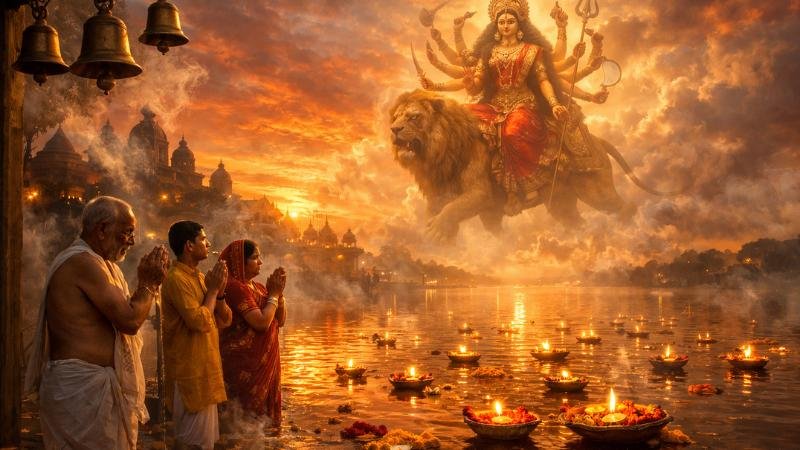
10/10/2026: The Numerology of Ten and Its Spiritual Connection with Mahalaya
10/10/2026: The Numerology of Ten and Its Spiritual Connection with Mahalaya An intriguing way to view 10 October 2026 is through the combined lenses of numerology, spirituality, and Hindu tradition. The date carries the symbolism of completion, new beginnings, ancestral remembrance and the power of the Divine Feminine—although its numerological meaning and its religious significance need to be understood separately. The numerological significance of 10/10/2026 The number 10: Completion and a new beginning In many numerological traditions, 10 combines the initiating energy of 1 with the potential represented by 0. It can symbolise a fresh cycle, leadership, independence and the opportunity to begin again with greater awareness. 10/10 A mirrored pattern The repetition of 10 gives the date a sense of symmetry. Symbolically, it invites us to reflect on what is ending, what we are ready to release, and what we want to create next. 3 The Universal Day number Adding the digits of the complete date gives: 1+0+1+0+2+0+2+6=121+0+1+0+2+0+2+6=121+0+1+0+2+0+2+6=12 1+2=31+2=31+2=3 In numerology, 3 is associated with creativity, expression, optimism, learning and communication. It adds a lighter, expressive dimension to the introspective symbolism of the double 10. The combined numerological interpretation, therefore, is a new beginning expressed through creativity, conscious choices and a renewed sense of purpose. This is a symbolic interpretation, not a scientifically established influence of the date. 2. The special connection with Mahalaya Here is the most significant connection: 10 October 2026 is Mahalaya itself. It falls on a Saturday and coincides with Sarva Pitru Amavasya, marking the culmination of Pitru Paksha in the Hindu calendar. Mahalaya carries two deeply meaningful spiritual themes. 1. Honouring our ancestors Mahalaya Amavasya is associated with Shraddha and Tarpan—rituals expressing gratitude and respect for departed ancestors. It reminds us that our lives are connected to generations who came before us. 2. Welcoming the Divine Mother In Bengali tradition, Mahalaya evokes the arrival of Maa Durga and the anticipation of Durga Puja. Reciting Mahishasura Mardini is a cherished part of the observance. It symbolises the awakening of divine power and the triumph of good over evil. There is a beautiful spiritual movement here: from remembering our roots to welcoming renewed divine energy. Is there a deeper connection between 10/10 and Mahalaya? We can explore this as a symbolic interpretation rather than a traditional scriptural rule. Numerological symbolism 1 — beginnings, initiative 0 — potential, the unmanifest 10/10 — repeated transition Total 3 — expression and creativity Mahalaya symbolism Awakening to a new phase The mystery of endings and renewal A sacred turning point in the seasonal calendar Devotional music, chants and cultural celebration Modern numerology sometimes interprets the number 0 as a symbol of infinite potential. Mahalaya’s association with Amavasya—the new-moon phase—offers an interesting parallel: darkness can be understood as a space of stillness before renewal. However, no established classical rule links the numerological pattern 10/10 directly to Mahalaya. The connection is reflective and spiritual, not a prescribed astrological doctrine. What can we do spiritually on 10 October 2026? You can observe the day in a way that brings together its ancestral and devotional significance. * Remember your ancestors: Offer prayers or perform Tarpan according to your family tradition. * Practise gratitude: Reflect on the lessons, sacrifices and strengths passed down through your family. * Invoke Maa Durga: Listen to Mahishasura Mardini, chant a familiar Durga mantra or spend time in prayer. * Release an old pattern: Use the day for honest reflection on a habit, fear or resentment you wish to work through. * Set an intention: Choose one constructive action that represents the beginning you want to create. The deeper message of this date For a spiritual reflection, I would express the essence of 10/10/2026 this way: We honour the past without remaining imprisoned by it. We remember those who came before us, acknowledge the lessons their lives have given us, and prepare ourselves to welcome a new chapter with courage and devotion. Mahalaya asks us to remember. The symbolism of 10 invites us to begin again. The number 3 encourages us to express that renewal through our thoughts, words and actions. That makes 10 October 2026 a particularly evocative date not because the numbers guarantee a supernatural event, but because the date brings together two rich traditions of reflection and renewal. #mahalaya#tarpan#numerology#numerologyreading